Mallorca beyond the postcards
There is a moment, usually on some winding mountain road in the Tramuntana, or when you stumble into a tiny cove that was not on any map, where Mallorca stops feeling like a holiday brochure and starts feeling like your own little secret. The island is good at that. It rewards people who look past the big resorts.
This is the Mallorca that artists fell for in Deià, where walkers still follow ancient stone paths above the sea, and where food lovers lose a morning in a small-town market full of almonds and local olive oil. You get dramatic mountain villages in the north and west, vineyards inland that get the sun right, hidden calas wedged between limestone cliffs, and Palma, which somehow manages to be both very old and genuinely cool.
We at Secretplaces have long been enamoured with this side of Mallorca. We have been going there for almost thirty years, after all. This guide will help you find the best hotels and villas in Mallorca (Majorca) that do right by the island’s real character.
Why Mallorca still catches us off guard
People think they already know Mallorca before they land. Usually, they are wrong. The Sierra de Tramuntana, a UNESCO World Heritage landscape, has some of the best hiking in the Med and some of the most atmospheric villages you will find. Inland, the wine regions around Binissalem are quietly turning out bottles worth hunting down. And the southeast coast, quieter, golden-stoned and genuinely lovely, feels like a different country from the busy beach strips of the west.
Why visit Mallorca? A few things that keep us coming back:
• Mountain views and secret coves that reward a bit of effort
• Stone villages that have not been packaged up for Instagram
• Really good local food, wine and olive oil: old stuff, not faddy
• That Mallorcan mood: elegant, unhurried, never flashy
• Landscapes that work for hikers, cyclists, families, or just sitting there
Where to stay in Mallorca
We are not big on giant resort complexes. At Secretplaces, we look for authentic places, the kind you genuinely feel sorry to leave at the end of the stay, and where you feel good from the moment you arrive.
In Mallorca, prices can vary enormously, and this is part of the island’s charm as a destination. You will find exceptional luxury hotels in Mallorca with remarkable design, deeply romantic atmospheres and beautiful spas, but also more modest, characterful places: small agritourism’s, family-run B&Bs and simple countryside retreats with genuine soul that you will find in our list of budget hotels and villas in Mallorca.
Boutique hotels and charming B&Bs in Mallorca
What matters to us is not the price category, but the feeling of the place. Little boutique hotels in Mallorca in restored manor houses, family-run guesthouses in quiet villages, proper fincas, and villas where dinner is taken outside under the stars. These are places with character, where breakfast might come with local olive oil, village bread, ramallet tomatoes, sobrasada and a delicious ensaïmada.
Mallorca is brilliant for small, design-conscious hotels. Some of the best are in former monasteries, old townhouses and traditional fincas, buildings with real stories. Look in Deià, Sóller, Valldemossa, Pollença and Palma’s old town. Out in the countryside around Alaró and Santa Maria del Camí, you will find elegant rural hotels with genuinely Mallorcan character and none of the fuss.
If you want something cosier, Mallorca’s guesthouses cannot be beaten. Many are family-run, tucked into villages or farmland, and they make you feel like a guest rather than a room number. The Tramuntana villages, inland market towns and quieter bits of the north coast are especially good for this.
Villas and holiday homes in Mallorca
Mallorca suits self-catering beautifully. You will find stylish villas from contemporary seaside houses to lovingly restored fincas surrounded by olive trees and birdsong. The north, around Pollença and Alcúdia, is popular for family villas with space. The southwest has elegant modern homes with sea views. Inland, the fincas offer something rarer: real peace and quiet. For independence plus easy beach and café access, look at stylish apartments near Palma, Port de Sóller or the smaller coastal villages. Many have good design and a genuine neighbourhood feel that hotels just cannot copy. Here you have our authentic selection of villas and self-catering accommodations in Mallorca.
Where to go in Mallorca, region by region
Sierra de Tramuntana: mountains, villages, timeless scenery
If you can only see one part of Mallorca, make it this. The whole western spine, with its dramatic coastal roads, ancient terraces, olive groves and stone villages, is the island at its most quietly spectacular. Deià has long attracted writers and artists, some of whom arrived for a week and never left. Few Mediterranean villages carry quite the same atmosphere: mountains, sea, warm stone and a sense that it is best discovered without too much of a plan.
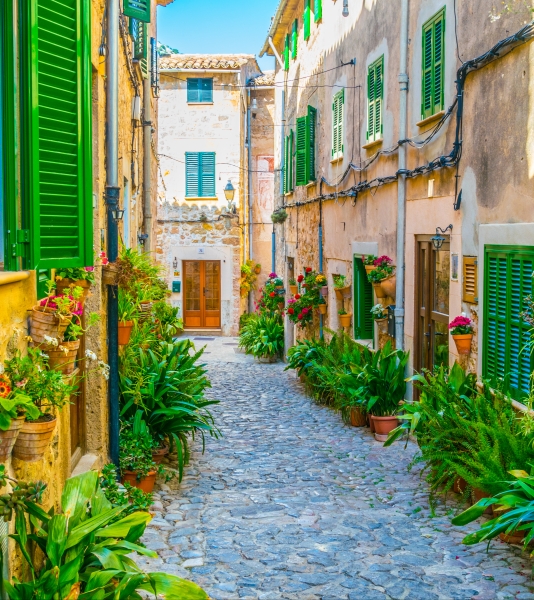
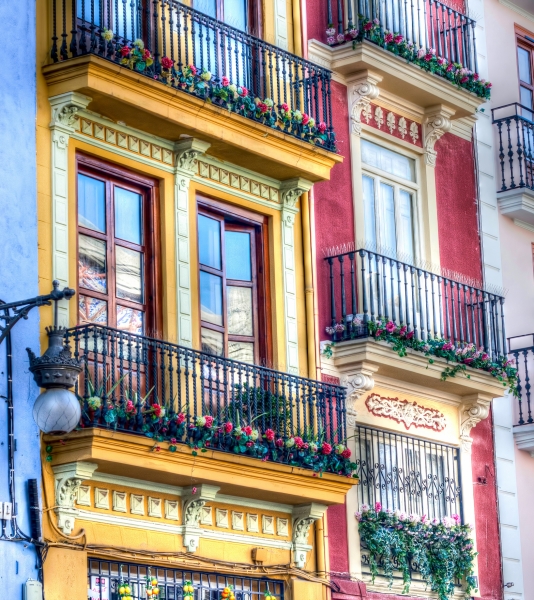
Valldemossa rewards slow wandering past flower-filled lanes and the monastery where Chopin spent a famously grumpy winter. It is elegant, unhurried and beautiful in a way that lives up to the attention it receives. Sóller keeps its village charm while welcoming visitors, with citrus groves, Art Nouveau details, the old tram to the port and a harbour that makes you want a long lunch.
Beyond the famous names, the foothills also hold quieter villages such as Caimari and Mancor de la Vall, both good for walkers, olive groves and a more local rhythm. Estellencs is another lovely choice: small, steep and dramatic, with the mountains behind it and the sea below. Less famous than Deià, but full of atmosphere. Accommodation in the Tramuntana is especially strong for romantic getaways, rural retreats, small hotels, guest houses and converted fincas. Some places sit in village streets, others on terraced hillsides with views towards the sea or olive groves.
Northern Mallorca: beaches, countryside, family stays
The north balances beaches, historic towns and open countryside about as well as anywhere. Pollença is one of the island’s most quietly sophisticated small towns, with art galleries, a lovely arcaded square and a slow café culture. It feels elegant without trying too hard, and makes a great base for beaches, countryside and real local life. Nearby Port de Pollença has a relaxed coastal rhythm that families find hard to resist.
The countryside around is full of restored fincas and traditional stone houses with pools and gardens. Campanet is a gentler inland option, well placed for discovering northern Mallorca at a slower pace, with countryside, village cafés and a strong sense of everyday island life
Around Pollença and Alcúdia, travellers can find elegant small hotels, family-friendly stays, villas, holiday homes and self-catering accommodation with space to settle in. The countryside behind the coast is particularly good for fincas and houses with pools, while the ports suit those who want the sea close by.
Palma de Mallorca: a city worth more than a day
Palma gets underestimated. Sure, it has a magnificent Gothic cathedral and Arab baths, but it has also developed a genuinely interesting food scene, excellent independent shops and a bunch of boutique hotels inside old mansions that rank among Spain’s best urban stays. Come for a long weekend; you will leave wishing you had booked longer.
In Palma, the best stays are usually intimate boutique hotels, small design-led hotels and restored townhouses hidden behind traditional façades. Many are within walking distance of the cathedral, Santa Catalina market, galleries and the seafront. For travellers planning a cultural city break, explore our boutique hotels in Palma de Mallorca.
Artà and the north-east
Artà and the north-east feel more independent and less polished than some of Mallorca’s better-known coastal areas. The town itself has sandstone streets, a hilltop sanctuary, good restaurants and a strong local rhythm, while the surrounding area reaches towards Capdepera, Canyamel, Son Servera and the Llevant peninsula. This part of the island suits travellers who want beaches, walking, villages and a quieter base away from the busiest resorts.
The north-east is a good area for countryside hotels, boutique guest houses, restored fincas and relaxed beach hotels near smaller coves. It works especially well for couples who want space, walkers who want access to natural landscapes and families who prefer villas or holiday homes outside the busiest zones.
Southeastern Mallorca: quiet coves and golden stone
The southeast moves slower. Around Santanyí and Cala Figuera you get golden stone, whitewashed houses, hidden beaches and a relaxed coastal atmosphere that feels nothing like the busier resort areas. Santanyí has a good market, beautiful nearby coves and a pace that reminds you what slow travel actually feels like.
Campos is a more rural, practical way than the others. It works best as a relaxed base for Es Trenc, the salt flats and the quieter south, rather than as one of Mallorca’s most atmospheric villages.
Around Santanyí, the accommodation style leans towards boutique hotels, village houses, rural fincas and self-catering villas near the south-east coast. It is a good area for couples, families and beach lovers who prefer coves to long resort beaches.
Central Mallorca: Alaró, Sineu, Santa Maria and the wine villages
Central Mallorca is for travellers who want to feel the island’s everyday rhythm. Towns such as Alaró, Sineu, Santa Maria del Camí, Binissalem, Llubí and Petra are surrounded by vineyards, almond trees, farmland and quiet roads. This is not the obvious beach choice, but it is one of the most rewarding areas for food lovers, cyclists, repeat visitors and anyone who wants to reach different parts of the island without changing base.
Sineu is known for its traditional market, but outside the busiest hours it still feels deeply Mallorcan, historic, central and full of local life. Llubí keeps a very low-key rhythm, with stone houses, open countryside and a simplicity that suits travellers who do not need everything polished. Petra brings that golden-stone inland Mallorca feeling, with a quiet historic centre and open agricultural landscapes around it.
The island’s interior is especially suited to country houses, fincas, rural boutique hotels, guest houses and peaceful self-catering stays. Many are set among gardens, vineyards or orchards, with easy access to markets and local restaurants.
If village life appeals to you, browse our collection of charming places to stay in Mallorca’s most beautiful villages.
Best stays by interest in Mallorca
For a cultural base with restaurants, galleries and architecture, choose boutique hotels in Palma de Mallorca. Palma is ideal for short breaks, winter trips and travellers who like to explore on foot.
For couples, the most atmospheric romantic getaways in Mallorca are often found in the Sierra de Tramuntana, around Deià, Valldemossa and Sóller, or in quieter inland fincas.
For families, family-friendly hotels and villas in Mallorca work especially well in the north around Pollença and Alcúdia, or in the south-east around Santanyí where beaches and coves are close by.
For beach-focused stays, beach hotels in Mallorca are best chosen by coastline: the north for wide sandy bays, the south-east for coves and the south for open beaches such as Es Trenc.
For privacy and longer stays, villas and holiday homes in Mallorca are particularly strong in the countryside around Pollença, Artà, Santanyí and the central wine villages.
For food and rural calm, countryside retreats in Mallorca and wine hotels in Mallorca are best inland, where weekly markets, vineyards and village restaurants become part of the journey.

What to see and do in Mallorca
Towns, villages and landscapes
Start in Palma for La Seu cathedral, the old town, Santa Catalina, contemporary art galleries and the seafront. Then head into the Sierra de Tramuntana for Valldemossa, Deià, Sóller, Fornalutx, Banyalbufar and Estellencs, where the landscape changes from terraces and olive groves to cliffs and sea views. The GR 221 Dry Stone Route crosses the Tramuntana and follows historic dry-stone landscapes, traditions and villages.
In the north, Pollença and Alcúdia combine history with access to beaches and cycling routes. Campanet offers a quieter inland stop with countryside and village life. In the east, Artà and Capdepera feel more local and rugged. In the south-east, Santanyí, Ses Salines, Cala Figuera and Campos are good for stone architecture, markets, coves and access to Es Trenc. Inland, Sineu, Santa Maria del Camí, Binissalem, Alaró, Llubí and Petra are rewarding for markets, wine, slower roads and everyday island life.
Nature, beaches and outdoor activities
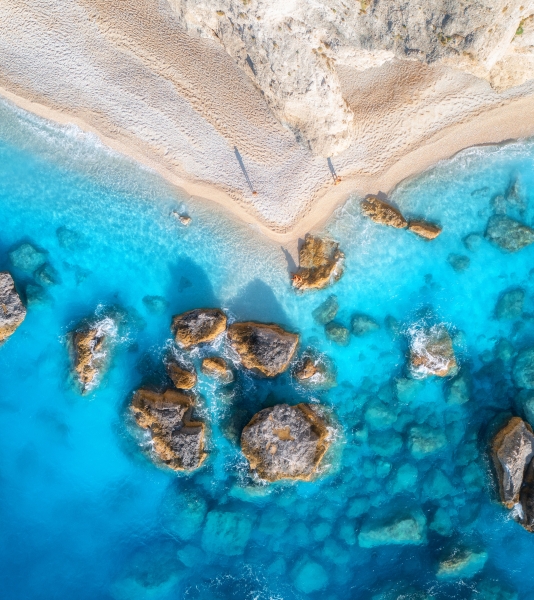
Mallorca has nearly 300 beaches, ranging from broad sandy shores to rocky coves surrounded by pine trees. The island’s best beach experience depends on the season and your patience: Es Trenc is beautiful but busy in summer, Cala Mondragó is good for combining swimming with a natural park, Formentor has dramatic scenery, and the small calas of the south-east reward early risers.
For walking, the Tramuntana is the island’s finest landscape, especially in spring and autumn. Cyclists come for the mountain roads, inland lanes and long coastal rides. Boat trips are worthwhile around Sóller, Port de Pollença, Cala Figuera and the east coast, while families may prefer the calmer bays of Alcúdia and Port de Pollença.
Food, markets and local life
Mallorca is excellent for travellers who plan their days around food. Look for pa amb oli, tumbet, sobrasada, ensaïmada, almond cake, local olive oil, citrus from Sóller and wines from Binissalem and Pla i Llevant. Palma’s markets are good for tapas and produce, while village markets in Sineu, Santanyí, Pollença, Alcúdia, Artà and Santa Maria del Camí show a more local side of the island.
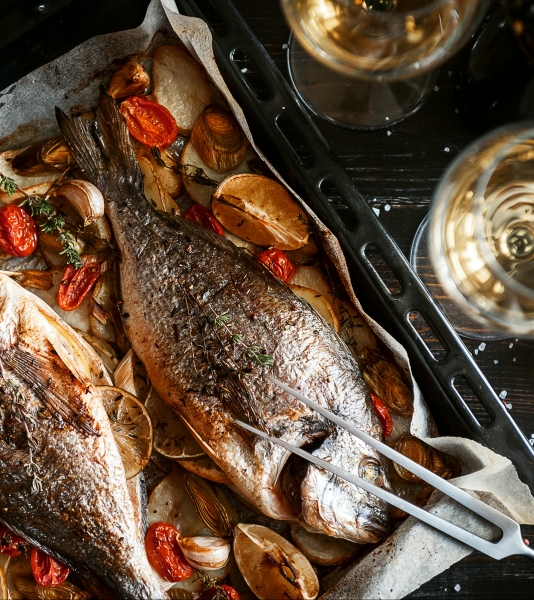
The best meals are often simple: grilled fish near a harbour, lamb in the interior, a bakery stop in the morning, or a long lunch after a walk. In summer, book restaurants ahead in Deià, Palma, Sóller and Santanyí; in quieter months, opening days can be more limited, especially in villages.
Culture and history
Mallorca’s culture is shaped by the Mediterranean, rural agriculture, maritime trade and layers of Moorish, Catalan and Christian history. You see this in Palma’s courtyards, the dry-stone terraces of the Tramuntana, the monasteries and sanctuaries on hilltops, the old walls of Alcúdia and the everyday use of Mallorquí alongside Spanish.
For a cultural route, combine Palma with Valldemossa’s Charterhouse, Sóller’s modernist details, Pollença’s Calvari steps, the sanctuary above Artà and the inland market towns. Mallorca is at its best when the famous sights are balanced with quieter hours: a village square before lunch, a late swim, a road through olive trees, or a market morning away from the coast.
Good to know before you go
When to visit
Spring, from April to May, and early autumn, from September to October, give you the best mix of warmth, green hills and smaller crowds. Summer is fine for beaches if you do not mind sharing. Winter is surprisingly peaceful and lovely for hiking.
Getting there
Most travellers fly into Palma airport, well connected across Europe. Rent a car. Seriously. It is the best and most practical way to reach the villages, rural stays and hidden coves that make Mallorca special.
Climate
Classic Med: hot dry summers, mild winters. The Tramuntana mountains are noticeably cooler and greener than the south.
A few practical tips from experience
• Rent a car. We know we said it already, but it is important.
• Book ahead. The best small hotels and popular restaurants fill up in summer.
• Look inland. Some of the most authentic experiences are away from the coast.
• Take the Sóller tram at least once. It is a small pleasure that sticks with you.
FAQs: the ones people actually ask
Do I really need a car?
Yes. A hire car opens up the quiet villages, rural fincas and hidden coves that you simply cannot reach by bus. The mountain roads in the Tramuntana are genuinely beautiful to drive. The only exception is in Palma, where you are better off walking or using taxis.
How far is everything from Palma airport?
Palma itself is about 15 minutes away. The northwest villages, including Deià, Valldemossa and Sóller, are roughly an hour away. Pollença takes around 50 minutes. The southeast coast is 45 minutes to an hour. Nothing on the island is more than 90 minutes away, which makes exploring surprisingly easy.
Best time for hiking?
Spring, from March to May. The landscape is green, almond and citrus blossoms are out, temperatures are ideal, and the trails are quiet. Autumn, from September to November, is almost as good. Summer hiking is possible but hot, so start early and carry plenty of water.
Is Mallorca worth visiting in winter?
More than most people realise. It is mild, peaceful and surprisingly beautiful. The villages feel genuinely local again, accommodation prices drop, and hiking conditions are excellent. Palma’s cultural life keeps going. Not beach weather, but for a slower, quieter trip, or just a warm escape from northern Europe, it works very well.
Can I combine Palma with a rural or coastal stay?
Easily, and it is a great way to do it. Spend two or three nights in Palma for the architecture, food and culture, then a few nights in a rural finca or coastal village. It is also a lovely idea to combine the north-east with the south-west, as both parts of the island feel very different. Distances are short, and the contrast makes each part feel richer.
Is Mallorca good for a rural holiday?
Absolutely. Inland Mallorca, with its fincas, vineyards, olive groves and slow villages, is one of the Med’s best destinations for proper countryside travel. It is a different island from the coast, and for many people a more lasting one.
Best beaches to avoid crowds?
The ones that take a bit of effort. Cala Deià in the northwest is small, rocky and stunning. Es Trenc in the south is long and relatively wild. In the southeast, Cala S’Almunia and Cala Llombards reward the walk from the car park. Go early or visit in May, June or September rather than July or August. It makes a huge difference. At some beaches, parking is paid and can fill up quickly, especially in high season, so it is worth arriving early.
What makes Mallorca different from the other Balearic islands?
Size and variety. Mallorca is big enough to hold genuinely different worlds in one trip: mountains, vineyards, historic cities, fishing villages and beautiful coastline. Ibiza has a more focused identity; Menorca is quieter and more pristine; Formentera is tiny and escapist. Mallorca offers the most to the widest range of travellers, without any one thing defining the whole experience.
Driving routes in Mallorca
Sierra de Tramuntana
The route through the Sierra de Tramuntana follows the Ma-10, one of Mallorca’s most scenic roads, winding through mountains, panoramic curves and sea views. Along the way, it is worth stopping in Banyalbufar, with its terraced vineyards overlooking the Mediterranean; Valldemossa, known for the Royal Carthusian Monastery and its cobbled streets; Deià, one of the island’s most charming villages; Sa Foradada, a beautiful place to watch the sunset; Sóller, with its lively main square, traditional shops and Modernist buildings; and Sa Calobra, a spectacular cove reached by a dramatic cliffside road.
This route also works well for quieter stops such as Estellencs, Caimari and Mancor de la Vall, especially for travellers who want mountain scenery, stone villages and a slower rhythm beyond the most famous names.
Wine route through inland Mallorca
Inland Mallorca is perfect for discovering the island’s wine culture and its more traditional side. The route can begin in Binissalem, the heart of Mallorca’s wine region and home to the island’s Denomination of Origin; continue through Santa Maria del Camí, known for its family-run wineries; and carry on towards Consell or Sencelles, quiet villages surrounded by vineyards, stone houses and rural landscapes.
It is an ideal route for wine tastings, local gastronomy and small artisan shops. Alaró, Sineu, Llubí and Petra can also be included for a fuller sense of central Mallorca, with markets, farmland, golden-stone streets and everyday village life.
Northern coast
The northern coast combines sea, mountains and some of Mallorca’s most impressive scenery. Start in Port de Pollença, with its seafront promenade and fishing-town atmosphere; continue to the Es Colomer viewpoint, one of the island’s most spectacular viewpoints; drive on to Cap de Formentor, with its cliffside road and lighthouse overlooking the Mediterranean; and finish in Alcúdia, a historic town with beautifully preserved medieval walls.
Campanet is a good inland detour if you want a quieter village stop between coast and countryside.
Eastern coast
The eastern coast is ideal for nature lovers, hidden coves and traditional villages. The route can start in Porto Cristo, home to the famous Caves of Drach, with their vast underground chambers and Lake Martel; continue towards Artà, a traditional town known for its crafts and local atmosphere; and finish in Cala Ratjada, a former fishing village surrounded by beautiful coves and crystal-clear waters.
Additional tips for special things to do in Mallorca
Drive to Cap de Formentor
At the northern tip of Mallorca, Cap de Formentor offers one of the island’s most spectacular drives, with viewpoints, cliffs and unforgettable sea views, especially at sunset.
Take the vintage train to Sóller
The wooden train connecting Palma with Sóller passes through tunnels, mountains and orange groves. It is one of Mallorca’s most charming experiences and a beautiful way to reach Sóller without driving.
Enjoy sailing in Puerto Portals
Mallorca is an important sailing destination, with prestigious regattas held throughout the year. Puerto Portals hosts events such as the 52 Super Series, the Dragon Winter Series and the Yanmar Dragon Gold Cup, attracting sailors and spectators from around the world.
Play golf by the Mediterranean
Mallorca is also an excellent destination for golf lovers, with courses spread across the island and a pleasant climate for much of the year. It is a great way to combine sport, scenery and relaxation, especially in areas such as Son Vida, Bendinat, Andratx, Pollença and Capdepera.
Relax at Cala Mondragó
Located within a protected natural park, Cala Mondragó is perfect for enjoying fine sand, turquoise waters and peaceful surroundings.
Explore the Caves of Drach
Near Porto Cristo, the Caves of Drach are one of Mallorca’s most famous natural attractions. They are known for their large underground chambers, Lake Martel and a short classical music concert performed on the water.
Visit Santanyí market
Santanyí’s outdoor market, held on Wednesdays and Saturdays from 9:00 to 14:00, is a lovely place to discover local produce, handmade crafts and traditional Mallorcan food.
Watch the sunset at Sa Foradada
Sa Foradada is one of the most magical places on the island to watch the sun set over the Mediterranean.
Spend time at Puerto Portals
Puerto Portals is one of Mallorca’s most elegant marinas, with yachts, restaurants, cafés and boutiques. It is perfect for lunch, a relaxed stroll or evening drinks by the harbour.
Discover Mallorca’s wine region
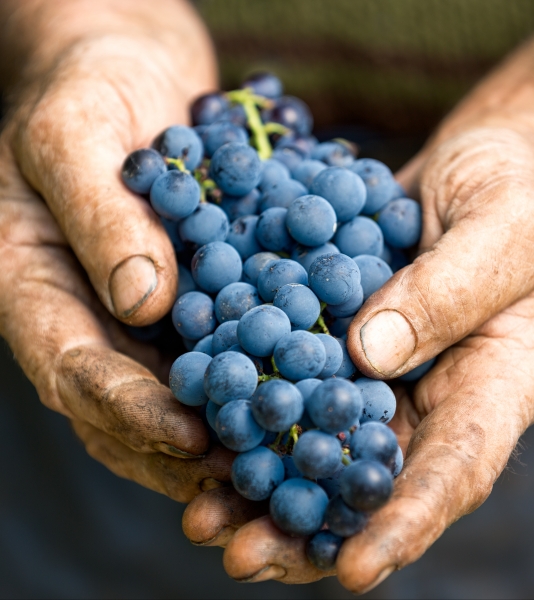
Visiting a winery is a wonderful way to experience another side of the island. Around Binissalem, Santa Maria del Camí, Consell and Sencelles, you will find family-run wineries, vineyards planted with local varieties such as mantonegro and prensal blanc, and tastings often paired with Mallorcan products.
Hidden coves and less crowded beaches in Mallorca
Cala Varques
A wild and beautiful cove on Mallorca’s east coast, surrounded by pine trees, rocks and turquoise waters. It’s more difficult access gives it a natural, adventurous feel, making it ideal for those looking for a less conventional beach experience.
Cala Tuent
Set between the Sierra de Tramuntana and the sea, Cala Tuent is a peaceful alternative to busier beaches nearby. Its dramatic mountain backdrop and clear waters make it especially appealing for travellers who love natural landscapes.
Cala Murta
Hidden on the Formentor peninsula, Cala Murta is a small cove reached on foot. Its calm, transparent waters and quiet atmosphere make it perfect for a refreshing swim away from the crowds.
Cala Bóquer
Reached by a scenic walk from Port de Pollença, Cala Bóquer is a wild, simple cove surrounded by nature. It is best suited to visitors who enjoy walking and prefer remote places over serviced beaches.
Cala Magraner
A secluded cove near Manacor, Cala Magraner offers a raw and peaceful setting, with rocky cliffs, clear water and no beach facilities. It is a good choice for a quiet, nature-focused beach day.
Cala s’Almunia
Small, rocky and full of character, Cala s’Almunia is one of the most charming coves in the southeast. Its fishermen’s houses and bright blue water make it especially picturesque.
Platja S’Amarador
Located inside Mondragó Natural Park, S’Amarador combines soft sand, clear water and protected natural surroundings. It is more accessible than the wilder coves, but still feels peaceful and beautifully preserved.
Our collections
Don’t know where to go? Let our collections inspire you.